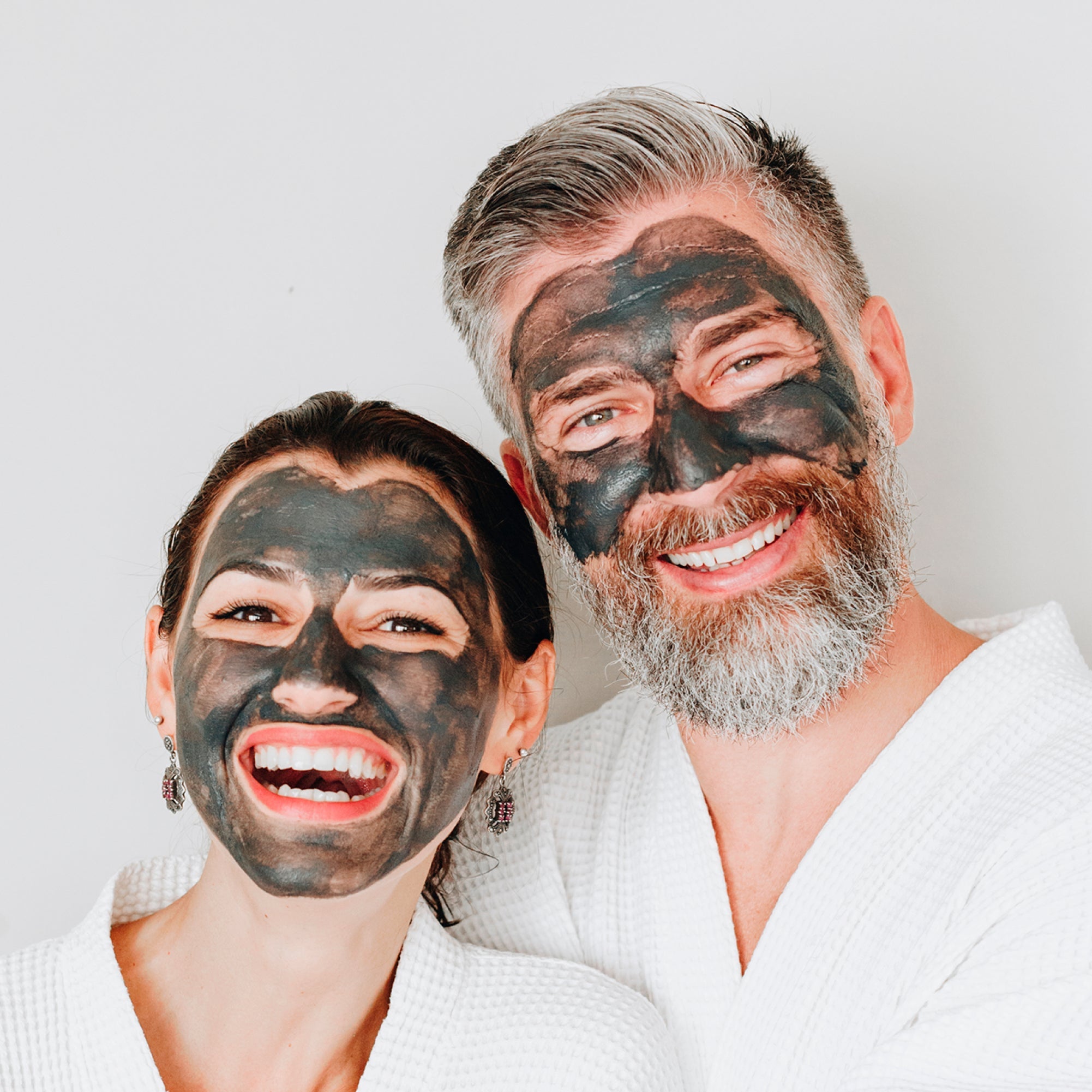
Clay Face Mask Benefits: How to Choose and Use Clay
By Mesonia Beauty Team
Clay has been used in skincare for thousands of years. Long before modern cosmetic formulas, naturally occurring mineral clays were part of beauty rituals in many cultures. Today, clay face masks remain popular because they offer effective surface cleansing, help absorb excess oil, and can leave the skin looking smoother and fresher.
The benefits depend on the type of clay, the complete formula, and how the mask is used. Clay is particularly useful for oily and combination skin, but gentler varieties can also suit normal, dry, or sensitive skin when combined with hydrating ingredients.
Deep cleansing and excess oil absorption
Clay particles have a large surface area and strong adsorptive properties. This allows them to bind excess sebum and impurities on the skin’s surface. When the mask is rinsed away, it can help remove this buildup and leave pores looking cleaner.
Regular but moderate use may help reduce visible shine and support a clearer-looking complexion. Clay masks do not literally “detox” the body, but they can effectively cleanse the skin’s surface of oil, makeup residue, and environmental particles.
For oily or blemish-prone skin, green clay and bentonite are commonly selected because of their higher oil-absorbing capacity. The Mesonia clay treatment can be incorporated into a routine designed to cleanse pores and manage visible oiliness without relying on aggressive daily scrubbing.
Smoother-looking texture
As a clay mask is rinsed away, its fine mineral particles provide mild physical exfoliation. This helps loosen dead surface cells and can make the skin feel softer and look more even.
Because clay absorbs surface oil and buildup, pores may appear temporarily smaller and less noticeable after use. A mask cannot permanently change pore size, but keeping pores clear can improve their appearance.
Minerals and different types of clay
Natural clays contain varying proportions of silica, calcium, magnesium, iron, potassium, and other minerals. Their colour and properties depend on their mineral composition and origin.
Bentonite clay has strong absorptive properties and is generally best suited to oily, very congested, or blemish-prone skin.
Kaolin or white clay is one of the gentlest options. It is often chosen for normal, dry, sensitive, or mature skin.
French green clay absorbs oil effectively and works well for combination and oily skin.
Red clay contains iron oxides and is often used in formulas for dull, dry, or sensitive-looking skin.
Pink clay, usually a blend of red and white clay, offers gentler cleansing and is commonly selected for sensitive or dehydrated skin.
The name or colour of a clay is not the only factor that matters. The concentration, particle size, additional ingredients, and time on the skin all affect how a mask performs.
How to use a clay mask correctly
Apply an even layer to clean skin, avoiding the eye and lip area.
Follow the time stated on the product label.
Do not allow the mask to become painfully tight or crack completely on the skin.
Rinse gently with lukewarm water without aggressive rubbing.
Follow with toner, serum, and moisturiser.
For oily skin, one or two applications per week may be appropriate. Dry or sensitive skin may need less frequent use and a gentler kaolin-based formula. If the skin feels tight, itchy, or irritated, shorten the application time or discontinue use.
Clay masks for different skin needs
Clay masks are not limited to oily skin. The right formula can support several routines:
oily and combination skin: reducing visible shine and cleansing congested areas;
blemish-prone skin: helping remove excess sebum that contributes to clogged pores;
normal skin: occasional deeper cleansing and smoother-looking texture;
dry or sensitive skin: gentle cleansing with kaolin, provided the formula also contains soothing and hydrating ingredients.
Multi-masking can also be helpful: a more absorbent clay may be applied to the oily T-zone, while a gentler or hydrating mask is used on drier areas.
The role of clay in a complete routine
A clay mask is a supporting treatment rather than a replacement for daily cleansing, moisturising, or sunscreen. Its main role is to provide periodic deeper cleansing, absorb excess oil, and improve the appearance of skin texture and pores.
Used correctly, clay can be a simple and effective addition to a skincare routine. Choose the type that suits your skin, avoid over-drying, and restore moisture after every application.